An introduction to AI that is useful to a builder looks nothing like a survey course. You do not need backpropagation. You need about ten concepts, each of which changes a decision you will make in your first week: what a token is, what the context window actually holds, why the loop matters more than the model, and how to tell whether the thing works. Below are those ten, with the arithmetic and the failure each one prevents.
01TL;DR
- Adoption numbers depend entirely on what you count. The 2026 Stanford AI Index reports organizational adoption at 88 percent, while the US Census Bureau put actual business AI use between 17 and 20 percent through May 3, 2026. Someone tried it is not the same as the business runs on it.
- Tokens are the unit of cost, latency, and limits at once. At Anthropic's published rates, Claude Haiku 4.5 is $1 per million input tokens and $5 per million output, and Claude Opus 5 is $5 and $25. A fivefold price gap for the same job is a design decision, not a shopping decision.
- Bigger context is not better context. Anthropic's own documentation names the problem: as token count grows, accuracy and recall degrade, which it calls context rot.
- Capability is jagged. The AI Index reports SWE-bench Verified going from 60 percent to near 100 percent in a single year, while top models read analog clocks correctly 50.1 percent of the time. Benchmarks do not predict your task.
- Everything above collapses into one habit: twenty real test cases, written before the prompt, scored after every change.
02Start with the adoption gap, not the hype
The most useful fact in any introduction to AI in 2026 is that the headline numbers disagree with each other, and the disagreement is the lesson.
The 2026 Stanford AI Index reports organizational adoption at 88 percent, alongside $285.9 billion of US private AI investment in 2025. The US Census Bureau's Business Trends and Outlook Survey, published May 26, 2026, measured something narrower and got 17 to 20 percent of firms using AI to produce goods or services, rising to 37 percent at firms with 250 or more employees and 39.7 percent in the Information sector. The Federal Reserve reported in April 2026 that about 41 percent of the workforce was using generative AI for work as of November 2025, while roughly 18 percent of firms had adopted it by the end of 2025.
Those are not contradictions. They are three different questions: did anyone at your company open a chat window, does your company use AI in production, and do you personally use it. The gap between the first and second answer is where all the actual engineering lives, and it is why the concepts below are worth an afternoon.
03Concepts 1 to 3: the token, the window, and the loop
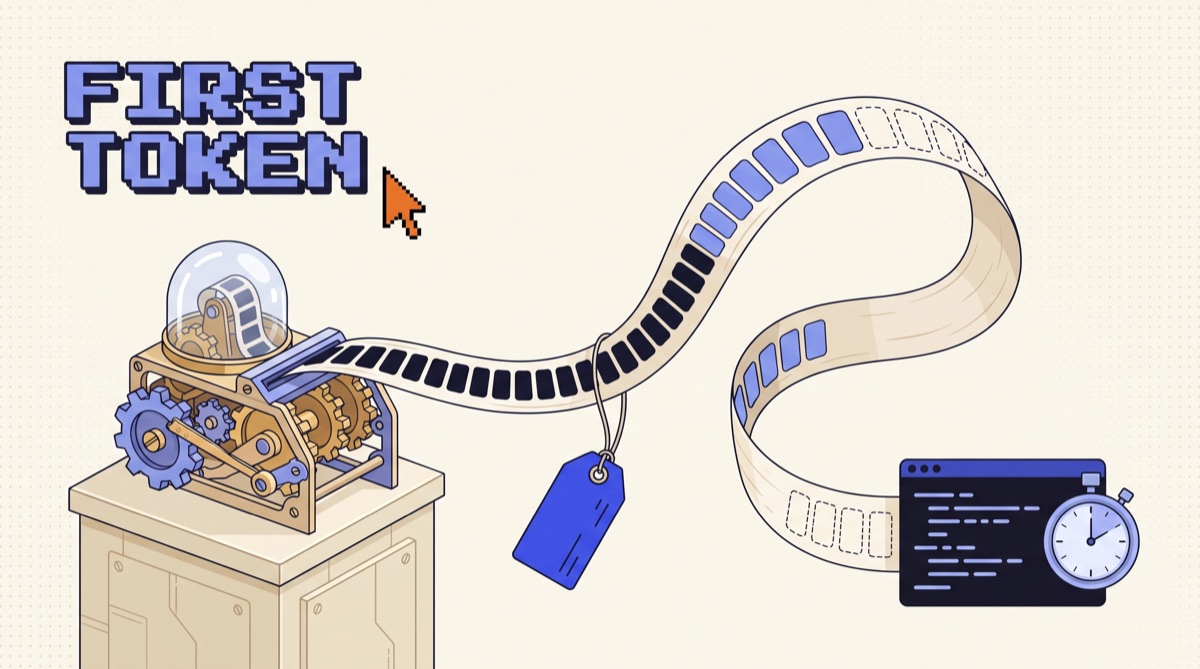
1. A token is the unit of everything. Roughly four characters of English, and it prices your bill, fills your limit, and sets your latency. Every part of a request is measured in tokens: your system prompt, your tool definitions, the whole conversation so far, any attached documents, and the response the model writes back. When a feature feels expensive or slow, the answer is almost always that something large is being resent on every call.
2. The context window is working memory, and it rots. Current frontier models carry a lot of room. Anthropic documents a 1M token context window as the default on its newer models, billed at standard rates, with up to 128k output tokens in one response. It also states the trap plainly: as token count grows, accuracy and recall degrade. Filling the window is not a strategy. Curating it is, which is the whole subject of context engineering.
3. The model is one step inside a loop you write. A useful system is rarely one call. It is read the input, call the model, check the output, act, and repeat until a stop condition. The model supplies judgment at one point in that sequence. Everything else, including the retries, the timeouts, the fallbacks, and the place the result gets written, is code you own. People who think the model is the product ship demos. People who think the loop is the product ship tools, which is exactly the distinction between an AI workflow and an AI agent.
04Concepts 4 to 6: nondeterminism, structured output, and tools
4. The same input can produce different output. This is the default, not a bug, and it breaks every testing habit you brought from ordinary software. You cannot assert equality on a string. You assert on shape, on whether required fields exist, on whether a number falls in a range, and on whether a second model grading the answer says it is acceptable. Plan for variance in the design rather than discovering it in production.
5. Ask for structured output, not prose. The single highest leverage change a beginner can make is to stop parsing paragraphs. Request JSON with a schema, and every downstream step becomes ordinary code. A support classifier that returns {"category":"billing","urgency":3,"needs_human":true} is something you can route, log, and count. The same answer written as a friendly sentence is something you regex and pray over. This is covered in depth in getting structured output from an LLM.
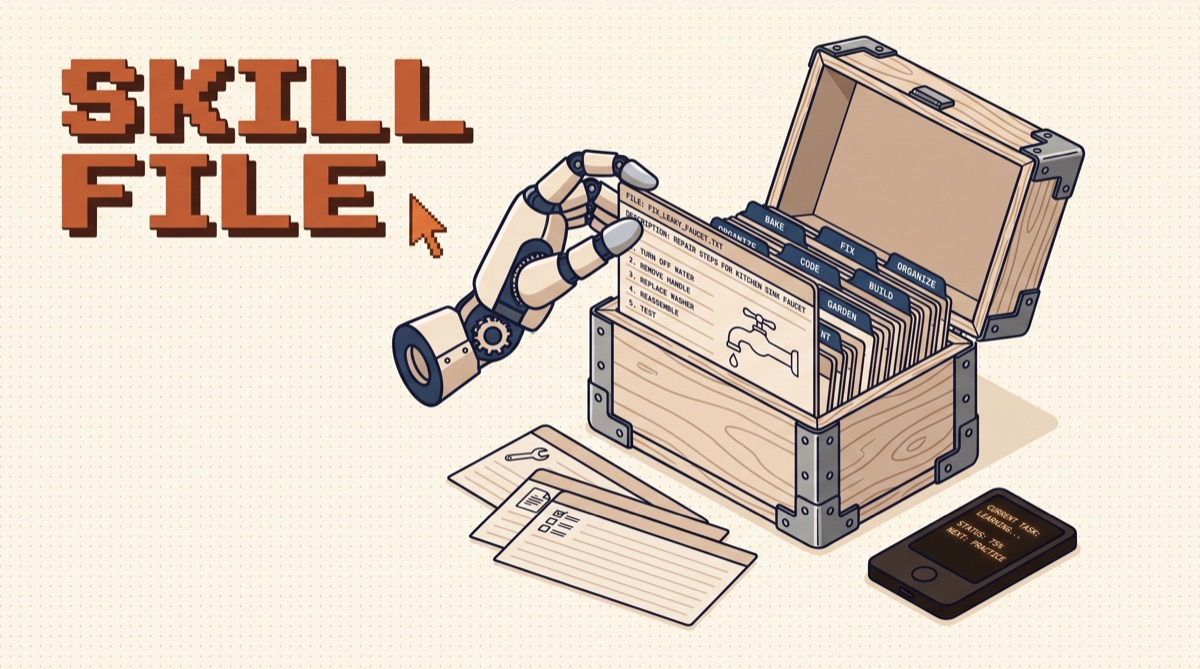
6. Tools are how the model touches the world. A tool is a function you describe to the model, which it can then request by name with arguments. It never runs the function. Your code does, and your code decides whether to. That separation is the entire safety story: the model proposes, you dispose. Tool definitions cost tokens on every call, so keep the set small and the descriptions sharp. If you want the fastest way to see this working across real apps, the MCP Big Three walks through the three connections worth wiring first.
05Concepts 7 and 8: retrieval and evaluation
7. Retrieval, not fine-tuning, is how the model learns your facts. Fine-tuning changes behavior and style. It is a poor and expensive way to teach a model that your Q3 refund policy changed on Tuesday. For facts, you fetch the relevant text at request time and put it in the context. That fetch can be a database query, a keyword search, or a vector search over embeddings. Start with the boring option. For a few hundred documents, keyword search usually wins and takes an hour.
8. Twenty test cases beat unlimited prompt tinkering. Before you write the prompt, collect twenty real inputs and write the output you would accept for each. Save the file. Now every prompt edit produces a number instead of a feeling. This takes about forty minutes and it converts your project from something you poke at into something you improve. The full method is in how to test an AI agent.
06Concepts 9 and 10: jagged capability and the cost curve
9. Capability is jagged, so benchmarks do not transfer. The 2026 AI Index reports SWE-bench Verified rising from 60 percent to near 100 percent in one year, and in the same report notes that top models read analog clocks correctly 50.1 percent of the time. Frontier systems that meet or exceed human baselines on competition mathematics still miss things a nine year old handles. There is no smooth frontier to reason from, which is why concept 8 exists. Your test set is the only benchmark that describes your problem.
10. Model choice is a cost curve, not a leaderboard. The published rates make the shape obvious. Anthropic lists Claude Haiku 4.5 at $1 input and $5 output per million tokens, Claude Sonnet 5 at $2 and $10, and Claude Opus 5 at $5 and $25. OpenAI's pricing puts gpt-5.6-terra at $2 and $12 with cached input at $0.20. Run the arithmetic on your own volume before you pick. A classifier handling 5,000 items a day at 1,500 input and 200 output tokens moves 225 million input and 30 million output tokens a month, which is $225 plus $150 on Haiku and $1,125 plus $750 on Opus. Five times the bill for a job Haiku does correctly. Two levers cut it further: cache reads bill at a tenth of base input, and the Batch API takes 50 percent off both sides. More on picking is in how to choose an AI model.
07What to build first
Pick one job you already do by hand every day, with a fixed input and a place the answer belongs. Inbox triage that labels mail and drafts replies without sending. A PDF extractor that turns a folder of invoices into a spreadsheet with a confidence column. A weekly digest that reads five sources and writes eight bullets.
Then build in this order. Collect twenty real inputs and write the accepted outputs. Write the prompt and demand JSON. Run the twenty and count. Wire the output to a surface someone already checks. Add a human gate on anything hard to reverse. Only then reach for a framework, and only if you felt the pain it removes.
If you want the working setup rather than the theory, the AI daily driver stack is the tool list I actually run, and ten weekend AI projects has the scope and failure mode for each build already written out.
08The bottom line
An introduction to AI that leaves you able to build is short. Tokens price everything. The context window is memory that degrades when you overfill it. The loop, not the model, is your product. Output is nondeterministic, so demand structure and test on shape. Tools let the model propose while your code disposes. Retrieval handles facts, fine-tuning handles behavior. Twenty cases beat infinite tinkering. Capability is jagged. Price varies fivefold for the same job. That is ten, and it is enough to start on Monday.
The gap between the 88 percent who have touched AI and the 17 to 20 percent whose business actually runs on it is not a knowledge gap. It is a shipping gap, and it closes one small finished thing at a time.
Start on the one job you do by hand every day. Grab the AI daily driver stack for the exact tools, and join the newsletter for the builds I ship each week, with the arithmetic attached.
Frequently asked
What is the best introduction to AI for someone who wants to build, not just read?
Skip the history of neural networks and start with the ten things that change your code. Learn what a token is, because it is the unit of cost, latency, and limits all at once. Learn what the context window holds and why stuffing it makes answers worse rather than better. Learn that the model is one step inside a loop you write, not the product itself. Learn to demand structured output instead of prose. Learn what a tool call is, how retrieval differs from fine-tuning, and why twenty saved test cases beat any amount of prompt tinkering. None of that requires linear algebra. All of it changes what you ship in the first week, which is more than any survey course will do.
Do I need to understand the math behind AI to build with it?
No, and pretending otherwise is why most people never start. You need to understand behavior, not derivations. A model predicts the next token from everything in its context, which explains almost every surprising thing it does: why it repeats a mistake you left in the conversation, why it invents a citation when the answer is not in front of it, why the same prompt gives two different answers. You can build production systems knowing that and nothing more about gradients. The math matters if you are training models. If you are calling an API, the skills that pay are evaluation, context design, and error handling, which are ordinary engineering skills applied to a component that is allowed to be wrong.
How much does it cost to run something built on an AI model?
Usually less than the meeting where you discuss it. Anthropic's published pricing puts Claude Haiku 4.5 at one dollar per million input tokens and five dollars per million output tokens, Claude Sonnet 5 at two dollars and ten dollars, and Claude Opus 5 at five dollars and twenty five dollars. A job that reads 500 documents a day at roughly 2,000 input tokens and 300 output tokens each burns 1 million input and 150,000 output tokens daily, which is about $1.75 a day on Haiku. Two features cut that further: cache hits are billed at a tenth of the base input price, and the Batch API takes fifty percent off both sides for anything that can wait. The model bill is rarely the thing that kills a project.
What is the difference between an AI workflow and an AI agent?
A workflow has a path you wrote. An agent chooses its own path. In a workflow you decide the order of steps and the model fills in the parts that need judgment, which means you can predict the cost, the latency, and the blast radius before you run it. In an agent you hand over the sequencing and the model decides which tool to call next and when to stop, which buys flexibility and costs you predictability. Most business processes are workflows wearing an agent costume. Start with the workflow, measure where it breaks, and hand over control only at the step where a fixed path genuinely cannot cope. Every unit of autonomy you grant is a unit of testing you now owe.
Why do AI models still fail at simple things while acing hard benchmarks?
Because capability is jagged, not a single line that rises. The 2026 Stanford AI Index reports that performance on SWE-bench Verified, a benchmark built from real software issues, went from 60 percent to near 100 percent in one year, while top models read analog clocks correctly only 50.1 percent of the time. Nothing about being good at code implies being good at clocks. This is the single most useful thing to internalize as a builder: you cannot infer performance on your task from performance on anyone else's. The only reliable answer is a test set drawn from your own inputs. Twenty real cases with the answers you would accept, run after every change.