// OPUSJAKE RESOURCE · PROMPT PACK
CHEAPEST FLIGHT
Four prompts that turn Claude into your fare hunter and booking agent. Sweep every date and airport combo, find the real total price, then let Cowork book the seat and watch the fare after you pay.
> boot opusjake_os
> resource: cheapest-flight
> version: v1.0 · 2026-07-11
> status: ready_
Airlines sell the same seat at a dozen prices depending on the day you fly, the airport you leave from, and how the trip is split. Nobody checks all of it by hand, so most people overpay by the price of a hotel night.
This is the exact four-prompt sequence I use instead. Claude sweeps the fares, does the fee math the booking sites hide, and with Cowork turned on it fills out the booking itself. Run the prompts in order, in one chat, and swap in your real details where marked.
THE HUNT
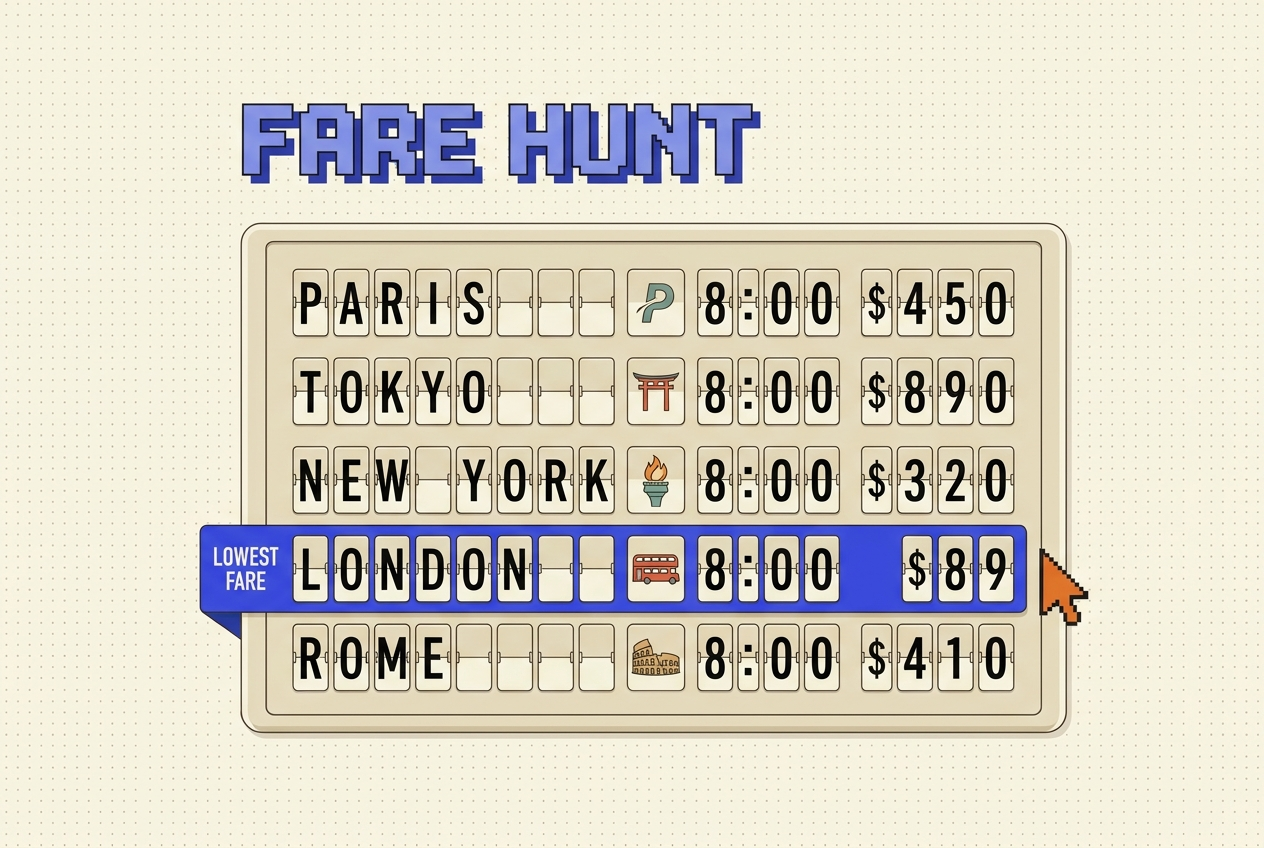
Cheap fares are a flexibility problem. The price you saw is one cell in a grid of dates, airports, and airline combinations, and the cheap cells are the ones nobody bothers to check. Turn on Cowork so Claude gets its own browser, then hand it the whole grid.
Prompt 1: cast the wide net
I need to fly from [HOME CITY] to [DESTINATION] around [DATES]. Search
Google Flights, Skyscanner, and Kayak. Check every departure and return
within 3 days of my dates, every airport within about an hour of both
cities, and two one-way tickets on different airlines instead of one
round trip. Give me a table of the 5 cheapest real options: airline,
airports, times, stops, price, and where to book it.
Claude works the search sites the way you would, except it actually finishes the job. Shifting one leg by a day or leaving from the second airport in town is routinely a 30 to 50 percent swing on the same route.
Prompt 2: find the real price
The sticker price is not the price. Budget carriers win the search results, then charge for the bag, the seat, and sometimes the boarding pass. Stay in the same chat and make Claude do the math.
For the top 3 options, find the true total for my trip: me plus
[BAGS, e.g. one carry-on and one checked bag] and a standard seat
selection. Check the airline's own website against the booking site
price. Flag any basic economy restrictions (no changes, no carry-on,
board last). Then give me a verdict: the single cheapest bookable
total, and where to book it.
The cheapest headline fare and the cheapest total are different flights more often than you would think. This prompt is where the pack usually pays for itself.
THE BOOKING
Here is the part that used to mean twenty minutes of forms and upsell screens. With Cowork on, Claude opens the booking site and works through it for you.
Prompt 3: book the seat
Book the winning option. Go to the airline's own website and start the
booking: my name is [FULL NAME AS ON ID], date of birth [DOB], email
[EMAIL], phone [PHONE], frequent flyer number [NUMBER, if any]. Decline
every upsell except [WHAT YOU ACTUALLY WANT, e.g. one checked bag].
Pick a free seat, aisle if available. Stop at the final payment screen
and hand it back to me to pay.
Claude fills the passenger details, clicks through the seat map, and swats away the insurance and upgrade screens. The payment click is the one part that stays yours. Once you pay, ask it to save the confirmation number and put the flight on your calendar.
Prompt 4: watch the fare after you book
Booking is not the end of the price story. Fares keep moving, and on many airlines a drop after booking is money you can claim as credit. This prompt makes the follow-up automatic.
Set up a scheduled task that rechecks the price of my booked flight
every day until departure. If it drops below what I paid, tell me and
explain exactly how to claim the difference as credit with this
airline. The day before departure, check me in as soon as the window
opens and send me my boarding pass details.
Now the fare watches itself, and check-in happens while you are doing something better.
BEFORE YOU RUN IT
A few things that make the sequence work.
- Put your details in once. Full name as it appears on your ID, date of birth, and loyalty numbers at the top of the chat. Every later prompt reuses them.
- Book direct when it is close. If the airline's own site is within a few dollars of the booking site, book direct. When a flight cancels, the airline fixes its own bookings first, and fare-drop credits are far easier to claim.
- Use the 24-hour rule. US airlines must let you cancel free within 24 hours of booking if departure is 7 or more days out. Book the good fare now and let Claude keep hunting overnight. If it finds better, you swap for free.
- Ignore the incognito myth. Prices move on demand and seat inventory, not your cookies. Sampling more dates and airports beats browser superstition every time.
WHERE CHEAP FARES HIDE
These are the levers Prompt 1 pulls. Worth knowing so you recognize the win when it shows up.
- Flying a day earlier or later than you planned
- The second airport within an hour of either city
- Two one-way tickets on different airlines
- A connection where the nonstop is charging a premium
- A budget carrier that is still cheaper after adding the bag (Prompt 2 does that math)
- Dawn departures, red-eyes, and midweek flights
- The booking window: roughly 1 to 3 months out for domestic, 2 to 8 for international
Run Prompt 1 the moment a trip becomes real. Ten minutes of Claude sweeping the grid is the difference between the fare everyone pays and the one almost nobody finds.
// GET THE NEXT DROP
New resources go out to the list as they ship. One email, unsubscribe whenever.