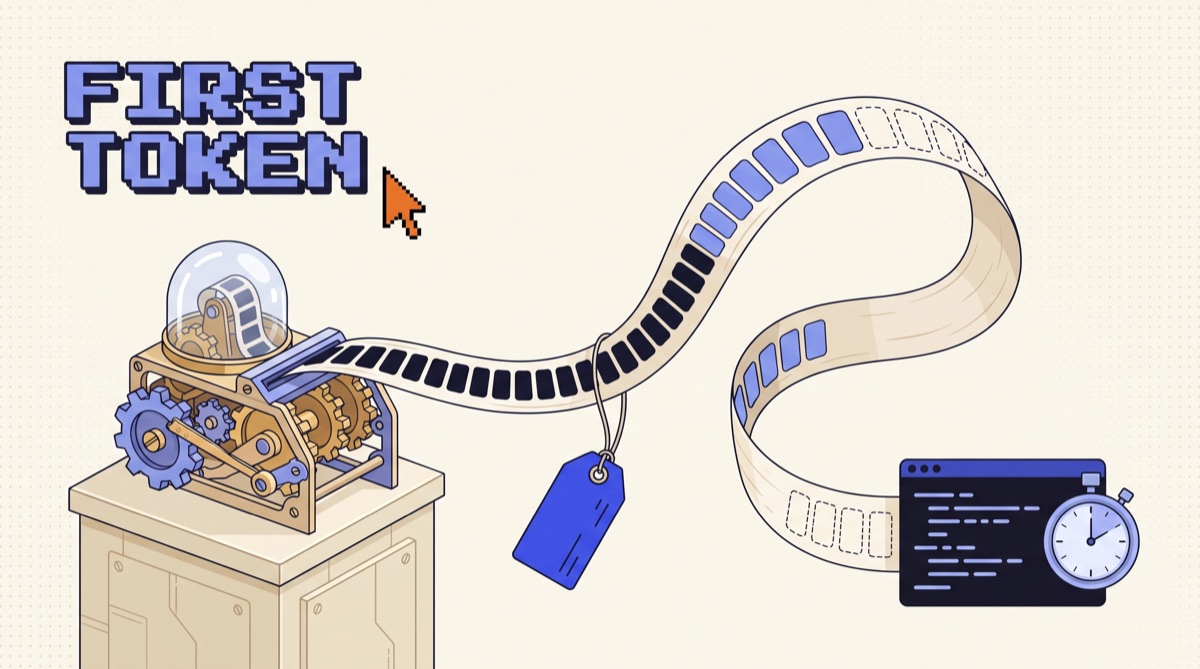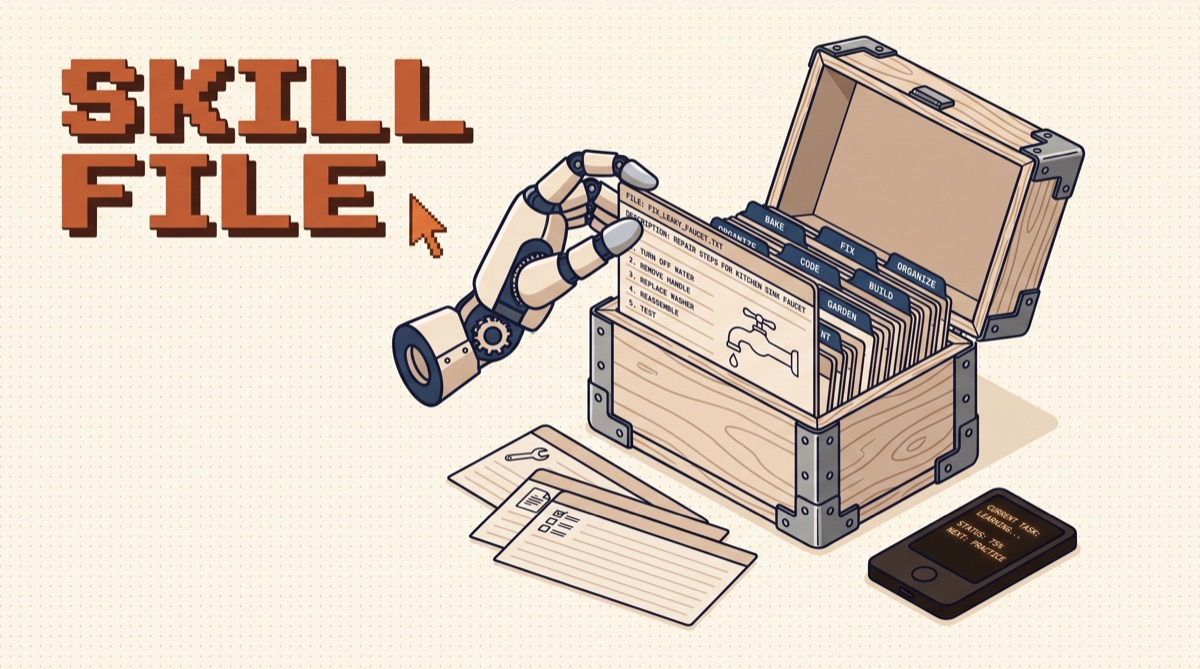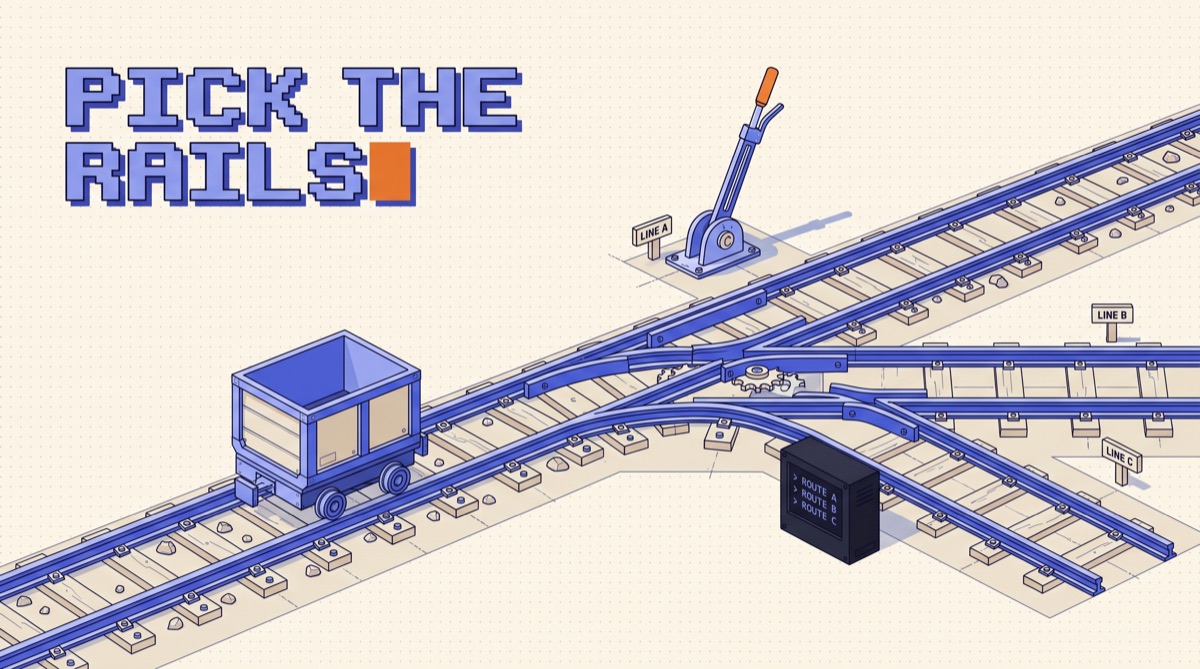
An AI agent framework is a library that wraps the model loop, tool routing, state, and traces so you do not write them yourself. LangGraph, CrewAI, the OpenAI Agents SDK, the Claude Agent SDK. You do not need one to ship an agent. You need one when a run has to survive a restart, pause for a human, or fan out in parallel. Everything else you can write in an afternoon.
01TL;DR
- Start without one. Anthropic's engineering guidance tells developers to use LLM APIs directly because "many patterns can be implemented in a few lines of code," and warns that frameworks "often create extra layers of abstraction that can obscure the underlying prompts and responses."
- The loop is not the hard part. Sending messages, reading tool calls, appending results, repeating: that is about forty lines. Durable state is the hard part.
- Adoption is real and quality is still the wall. LangChain's State of Agent Engineering (1,340 responses, November 18 to December 2, 2025) puts 57.3 percent of respondents with agents in production, with quality named the top blocker by about a third and latency second at 20 percent. Cost has faded as a concern.
- Observability is the layer people actually buy. In that same survey 89 percent had implemented observability and 62 percent had detailed tracing, while only 52.4 percent ran offline evals on test sets.
- Lock-in shrank. MCP moved to the Linux Foundation's Agentic AI Foundation on December 9, 2025, with AWS, Google, Microsoft and OpenAI as platinum members. Tool access is a protocol now, not a framework feature.
02What a framework is actually selling you
Strip the marketing off any agent framework and you find five layers stacked on top of the model API. They are not equally valuable, and the top two are the ones people think they are buying.
The loop is a while statement. Tool plumbing used to be a genuine chore and is now a protocol: you write an MCP server once and every client that speaks MCP can call it. What remains is state, concurrency, and traces, which are ordinary distributed systems problems that ordinary distributed systems people have spent decades getting wrong.
That is the honest pitch for a framework. It is a workflow engine with a model-shaped API on the front.
03Write the two hundred line version first
Before you evaluate anything, build the smallest agent that does one real job in your product. No framework. Five files.
- The loop. Send the message list, read the tool calls off the response, execute them, append the results, repeat until the model returns a final answer or you hit a step cap. Set the cap at something low, like 12, and log every time you hit it.
- The tools. Three to five of them, each with a description written for a model that has never seen your codebase. Return errors as text the model can act on, not exceptions that kill the run.
- The prompt file. One file, version controlled, with the rules and the examples. Not a string buried in a class.
- The state row. One database row per run: input, the message list so far, status, step count, last error. This single row is what a framework's checkpointer gives you, and writing it yourself teaches you exactly what your resume semantics need to be.
- The eval set. Twenty cases with known good outputs. Run them on every prompt change.
That build takes a day or two and it settles arguments no comparison article can. You find out whether your agent is really a fixed pipeline with one model call in the middle, which most of them are. I wrote up the general shape of that in WRITE LOOPS NOT PROMPTS, which is the same pattern applied to any repeated agent job.
The reason to write it yourself is not purity. It is that you cannot evaluate an abstraction until you know what it is abstracting.
04The four questions that justify a dependency
Once the raw version runs, score it against four questions. Each one is a real engineering problem with real edge cases, and each one costs you weeks to build properly.
Does the run have to survive a process restart? A support agent that answers in eight seconds does not. A research agent that runs for nine minutes across forty tool calls does, because your deploy will land in the middle of it. Checkpointing means every step boundary writes recoverable state, and getting resume semantics right for partially executed tool calls is genuinely fiddly.
Does it pause for a human and resume later? Approval gates are the single most common reason teams outgrow their own loop. The pause can last hours. The state has to be serialized, the run has to be addressable by an ID a UI can post back to, and the resumed run has to pick up in the right place with the human's decision injected. Frameworks that do this well are worth real money.
Does it fan out in parallel? Three sub-tasks in flight, joined at the end, with cancellation when one fails and a token budget across all of them. You can write this. You will write it badly the first time.
Do you need to replay a past run? Not a log. A replay: the exact messages, tool inputs and outputs, and timings for run a4f9, from Tuesday, so you can find where it went wrong. That LangChain survey found 89 percent with observability in place, and it is the layer teams reach for first because agent bugs are unreproducible without it.
Score zero or one and you should stay on the raw SDK. Score two or more and a framework will save you more than it costs.
05The three families, and what each is for
Comparison posts rank these against each other as if they were competing for the same job. They are not.
Graph and state machine frameworks. You define nodes, edges, and a typed state object, and the runtime handles checkpointing, interruption, and resume. LangGraph is the reference example. This shape fits when your agent is a process with named steps and approval gates, and it is deliberately more verbose than the alternatives because the explicitness is the product. Pick it when you need to point at a diagram and say what happens after step four fails.
Role and crew frameworks. You describe agents by role and give them tasks, and the library handles delegation and handoff. CrewAI is the reference example. It reads well, it gets a multi-agent demo running in an afternoon, and it hides more of the control flow. Pick it when the mental model of your problem genuinely is a team of specialists, and be honest that most problems described that way are actually a pipeline with three prompts. I wrote about when the multi-agent shape is real in How to Build a Multi-Agent System.
Vendor SDKs. The OpenAI Agents SDK and the Claude Agent SDK are thin loops with handoffs, tool wiring, and tracing attached, maintained by the people who ship the model. They move fastest on new model features and they are the least abstraction between you and the API. Pick one when you have already committed to a provider and you want the loop and traces without a third-party dependency in the middle.
None of these makes a bad agent good. Quality problems are prompt, tool, and eval problems, which is why quality is still the number one production blocker in a year when every one of these libraries is mature.
06Keep the exit cheap
Whatever you adopt, you will want out of it eventually. Five rules make that a week of work instead of a rewrite.
- Own your prompts. Plain files in your repo, loaded at runtime. Never inside a framework class or a hosted prompt registry you cannot diff.
- Own your tools. Write them as MCP servers or plain functions with your own schema, then adapt them at the framework boundary. Post donation, MCP is the closest thing to a neutral standard for tool access, which is exactly what you want from the layer you least want to rewrite. The three worth wiring first are in THE MCP BIG THREE.
- Own your state schema. Your run table, your columns, your migrations. Let the framework checkpoint into it if it can. Do not let its internal representation become your source of truth.
- Own your evals. The eval harness should call your agent through one function signature that has nothing framework-specific in it. Then a framework swap is a change behind that function, and your twenty test cases tell you immediately whether it worked.
- Keep it at the edges. The framework orchestrates. It should not be imported by your business logic, your database layer, or your API handlers.
Teams that skip these rules end up unable to answer a simple question during an incident: what did the model actually get sent. That is the abstraction cost Anthropic's guidance warns about, and it shows up at exactly the wrong moment.
07The bottom line
AI agent frameworks solve workflow problems, not intelligence problems. Write the two hundred line version first, because it takes a day and it tells you which of the four hard questions you actually face. If you score zero or one, keep your loop and spend the time on tools and evals instead, which is where quality lives. If you score two or more, pick the family that matches the shape of your problem, keep your prompts, tools, state, and evals outside the framework, and treat it as orchestration at the edge of your system rather than the center of it.
If you want the next one of these when it lands, get it in the newsletter.
Frequently asked
What is an AI agent framework?
An AI agent framework is a library that wraps the parts of an agent you would otherwise write yourself: the loop that calls the model and feeds tool results back in, the routing between steps, the place the run's state lives, and the trace of what happened. LangGraph, CrewAI, the OpenAI Agents SDK and the Claude Agent SDK all sit in this category, but they are not the same product. Some are state machines you draw. Some are role and task abstractions. Some are thin loops tied to one provider. The framework does not make the agent smarter. It decides what happens when a run is interrupted, when two steps need to run at once, and when you need to see why the model did what it did three days ago.
Do I need a framework to build an AI agent?
No. Anthropic's own engineering guidance recommends that developers start by using LLM APIs directly, because many agent patterns can be implemented in a few lines of code, and it warns that frameworks add abstraction that obscures the underlying prompts and responses. The core loop is roughly forty lines: send messages, read tool calls, execute them, append results, repeat until the model stops asking for tools. Write that first. You will understand your own system, and you will find out which of the harder problems you actually have before you pick a library to solve them.
When is an AI agent framework actually worth the dependency?
When at least two of these four are true. The run must survive a process restart, so state has to be checkpointed rather than held in memory. The run must pause for a human approval and resume later, possibly hours later. Steps must fan out in parallel and join, with cancellation when one branch fails. And you need to replay a specific past run step by step to debug it. Those four are real engineering problems with real edge cases. Loops, prompt templates, and tool schemas are not. If you score zero or one, stay on the raw SDK.
Does using a framework lock me in?
Less than it did. In December 2025 Anthropic donated the Model Context Protocol to the Linux Foundation's new Agentic AI Foundation, alongside Block's goose and OpenAI's AGENTS.md, with AWS, Google, Microsoft and OpenAI among the platinum members. Tool access is now a protocol rather than a framework feature, so the tools you write are portable by default. What still locks you in is everything you let the framework own: your prompts, your state schema, your retry policy, and your evals. Keep those in your own code and a framework swap becomes a week instead of a quarter.
Which AI agent framework should I choose in 2026?
Choose by the shape of the problem, not by popularity. If your agent is a state machine with checkpoints and human approval gates, a graph framework such as LangGraph is built for exactly that. If it is a set of specialist roles handing work to each other and readability matters more than control, a crew style framework such as CrewAI gets there in fewer lines. If you are committed to one model provider and want a thin, well-supported loop with tracing attached, use that provider's own SDK. And if you cannot describe your agent in any of those three shapes yet, you are not ready to pick, which is the most common situation.